

woman exercising

Colorado Plastic Surgery Center — Denver, CO

Diet and exercise reduce overall body fat and improve health. Liposuction surgically removes localized fat deposits from specific areas that resist even consistent lifestyle changes. Both have a role, but they work differently, address different problems, and aren’t interchangeable.

Board-certified plastic surgeon Dr. Nick Slenkovich and board-eligible plastic surgeon Dr. Laura Roider perform advanced body contouring procedures at Colorado Plastic Surgery Center in Denver. One of the most common questions they hear in consultations is whether liposuction makes sense for someone who is already active and eating well, and if so, why diet and exercise haven’t been enough.

In this post, we’ll explain how liposuction and lifestyle changes differ, when surgery becomes the right option, and how the two approaches work together for lasting results.

How Diet and Exercise Affect Body Fat

When you lose weight through diet and exercise, fat cells shrink throughout your entire body, not just in the areas you’d like to target. This systemic process produces real health benefits, but it also has physiological limits that no amount of effort can override:

  • Whole-body reduction: Fat loss happens systemically. Your body determines where it burns fat based on genetics, hormones, and age, not on which muscle group you worked hardest. You can’t select the area.
  • Genetic fat distribution: Where your body stores fat, and where it holds onto it longest, is largely inherited. Some areas are hormonally resistant to change regardless of fitness level.
  • Fat cell shrinkage, not elimination: Exercise and calorie restriction reduce the size of fat cells. They don’t remove fat cells from the body. Those cells remain and can expand again if weight increases.
  • Meaningful health benefits: Regular exercise and balanced nutrition support cardiovascular health, metabolic function, and long-term well-being, outcomes that liposuction doesn’t produce.

The National Institute of Diabetes and Digestive and Kidney Diseases identifies lifestyle modification as the foundation of healthy weight management. What it can’t do is redirect where that weight comes from or override the anatomic factors that govern fat distribution. Many Denver patients who come in for liposuction consultations are already doing the right things and finding that specific areas simply don’t respond.

How Liposuction Removes Fat Differently

Liposuction takes a targeted approach that diet and exercise can’t replicate. During the procedure, specialized instruments are used to permanently remove fat cells from specific areas. Not shrink them. Remove them. That distinction matters:

  • Targeted removal: Liposuction addresses localized deposits precisely. Common areas include the abdomen, flanks, inner and outer thighs, upper arms, back, and chin.
  • Permanent fat cell elimination: Unlike dieting, which reduces fat cell size, liposuction removes fat cells from the treated area entirely. Those cells don’t return.
  • Contour refinement: The procedure reshapes specific areas in ways that lifestyle changes alone can’t achieve, particularly in zones governed by anatomy rather than habits.
  • Visible results within weeks: Swelling is expected initially and takes months to fully resolve, but most patients see meaningful changes within the first four to six weeks.

Dr. Slenkovich and Dr. Roider perform liposuction at Colorado Plastic Surgery Center using modern techniques focused on smooth, proportionate results. Their approach is calibrated to each patient’s anatomy. The goal is a result that looks like you, not like a procedure was done.

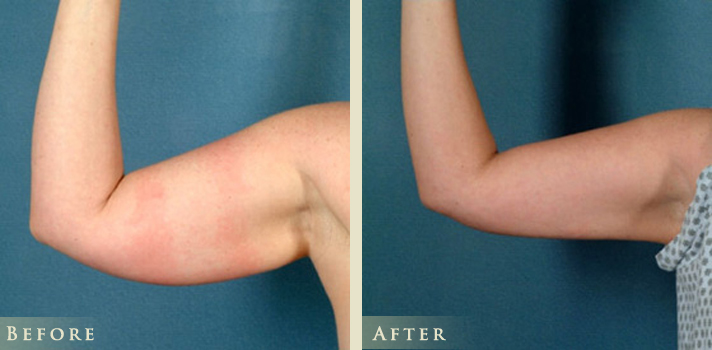
*Real Patient Results = Before & After Liposuction

When Is Liposuction the Right Choice?

Liposuction is a contouring tool. It works for a defined group of patients, and understanding that boundary honestly is part of how we consult at Colorado Plastic Surgery Center. The procedure is best suited for:

  • Localized fat that hasn’t responded to diet and exercise: Patients who are at or near their goal weight but have specific deposits that remain disproportionate to the rest of their body, despite sustained effort.
  • Good skin elasticity: Skin needs to contract smoothly after fat is removed. Patients with adequate elasticity see clean, natural results. Where elasticity is limited, a different approach or an additional procedure may be needed.
  • Stable weight for at least six months: Operating on a body whose weight is still changing produces results that won’t hold. Weight stability is a clinical requirement, not a preference.
  • Clear understanding of what the procedure does: Liposuction refines contour. It doesn’t produce significant weight loss, improve skin quality, or build muscle definition. Patients who understand what they’re asking the procedure to accomplish tend to have better outcomes.

The American Society of Plastic Surgeons describes ideal candidates as patients who are not significantly overweight but have specific areas of fat disproportionate to the rest of their body. In our Denver practice, that profile maps closely to what we actually see: patients who are already active, have been consistent, and want to address the areas that haven’t followed.

During consultations, Dr. Slenkovich and Dr. Roider are direct about whether liposuction addresses what a patient is describing, or whether a different approach is the more appropriate conversation.

Why Combining Both Approaches Produces the Best Results

Liposuction and a healthy lifestyle aren’t competing strategies. They address different layers of the same goal. The patients who see the strongest, most durable results are typically those who treat them as complementary:

  • Reaching a stable weight before surgery: A consistent baseline before liposuction is what makes the result stable. It also reduces surgical risk. Coming in close to your goal weight, not planning to lose weight after, is part of what makes candidacy.
  • Maintaining healthy habits after surgery: The fat cells removed are permanently gone from the treated area. But remaining fat cells throughout the body can expand with significant weight gain. The habits that got a patient to candidacy are what protect the result.
  • Revealing underlying definition: Patients who exercise regularly often see more pronounced definition emerge as swelling resolves post-operatively. Liposuction removes the fat layer that was diffusing the muscle structure underneath. The definition was already there.
  • Long-term durability: Results hold when weight holds. The surgical outcome and the patient’s ongoing habits are directly connected.

Dr. Slenkovich and Dr. Roider approach liposuction as a clinical partnership with the patient. Consultations at Colorado Plastic Surgery Center address lifestyle factors directly: what’s working, what isn’t, what realistic maintenance looks like, and whether the timing is right for surgery. That conversation happens before any surgical plan.

Common Misconceptions Worth Addressing

Patients come to Denver liposuction consultations with a wide range of expectations. A few that come up consistently:

  • Liposuction is a weight loss procedure: It isn’t. The goal is contouring, not weight loss. Most patients see no meaningful change on the scale after surgery, even as their body shape changes. Patients who are well above their goal weight are not the right candidates.
  • Treated fat cells can come back: They can’t. Fat cells removed by liposuction are permanently eliminated from the treated area. What can happen is that remaining fat cells elsewhere in the body expand with significant weight gain, which changes the overall result.
  • Liposuction is for people who don’t exercise: The opposite is often true. Many of the best liposuction candidates are people who exercise regularly and have specific anatomic areas that haven’t responded. The procedure addresses what lifestyle changes can’t reach.
  • One procedure fits every patient: It doesn’t. Dr. Slenkovich and Dr. Roider evaluate each case based on the patient’s specific anatomy, skin quality, areas of concern, and goals. There is no standard approach.

Discover Whether Liposuction Is Right for You

Diet and exercise improve your whole body and underlie long-term health. Liposuction addresses specific anatomic areas that your best lifestyle efforts haven’t been able to change.

For the right patient, the two approaches work together, one as the foundation, one as the finishing layer.

If you’re near your goal weight, have been consistent with diet and exercise, and have localized areas that haven’t responded, a consultation is the right next step. Dr. Slenkovich and Dr. Roider see patients at Colorado Plastic Surgery Center in Denver. Call (720) 594-5634 to schedule.


Back to Blog
Top Doctor for 2024
Nick Slenkovich

Book Now Partnering in Your Self-Improvement Journey

If you are considering cosmetic surgery to improve your physical appearance and self-image, we invite you to schedule a consultation with board-certified Denver plastic surgeon Dr. Nick Slenkovich or board-eligible plastic surgeon Dr. Laura Roider. Dedicated to your comfort from your first visit to your final follow-up, the surgeons and staff of Colorado Plastic Surgery Center will always treat you with kindness, compassion, and personalized care.

Schedule a Consultation

All content on this page was reviewed by Healthcare Chief Operating Officer Stephanie Cooper, MBA, MHA

Accessibility: If you are vision-impaired or have some other impairment covered by the Americans with Disabilities Act or a similar law, and you wish to discuss potential accommodations related to using this website, please contact our Accessibility Manager at (720) 594-5634.
Contact Us